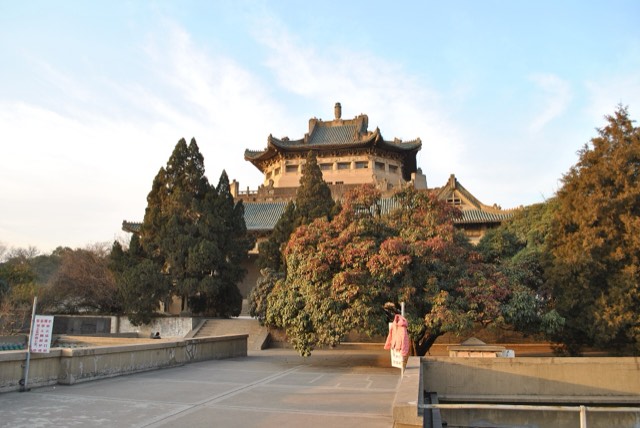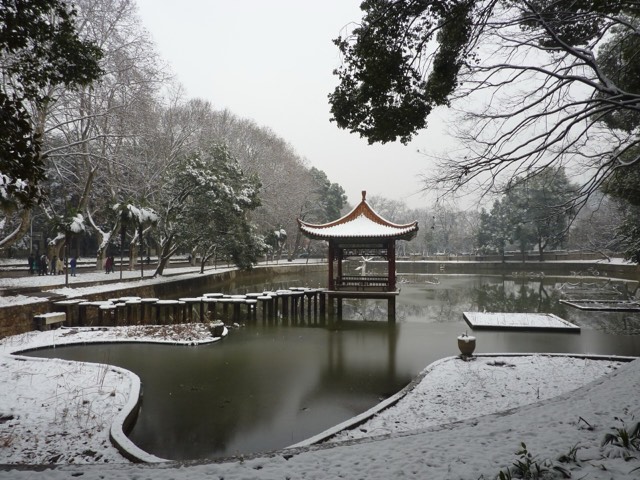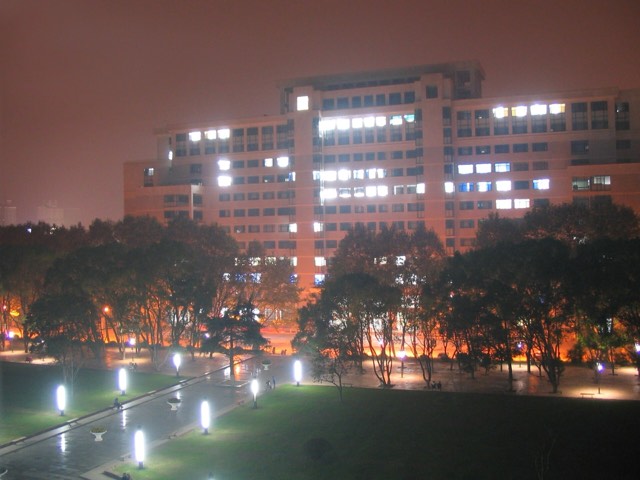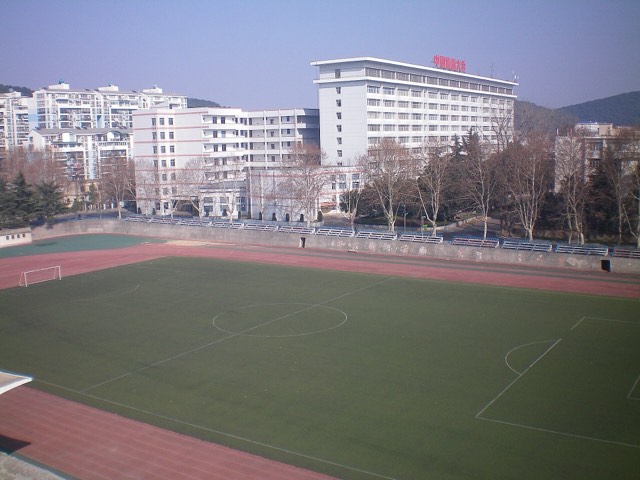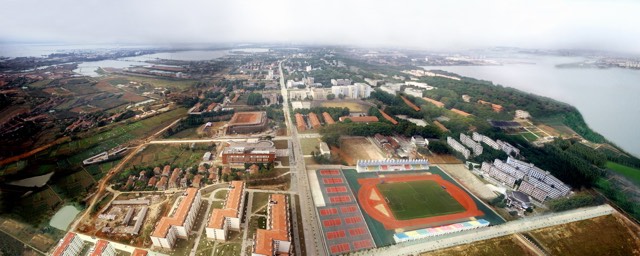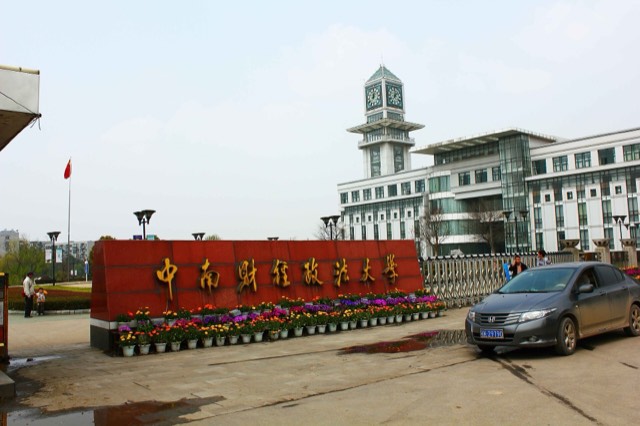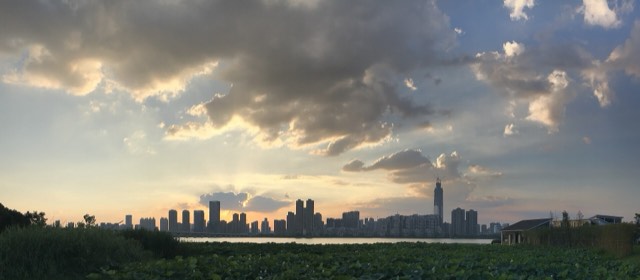
Central China's largest city, where the Yangtze and Han rivers meet and divide it into Wuchang, Hankou and Hanyang. With dozens of universities and over a million university students, it is one of China's biggest student cities.
Climate
Humid subtropical, with very hot, humid summers (another of the 'furnace cities') and chilly, damp winters. Spring and autumn are short but pleasant.
Local language
Mandarin; locals also speak the Wuhan dialect, a form of Southwestern Mandarin.
Food to try
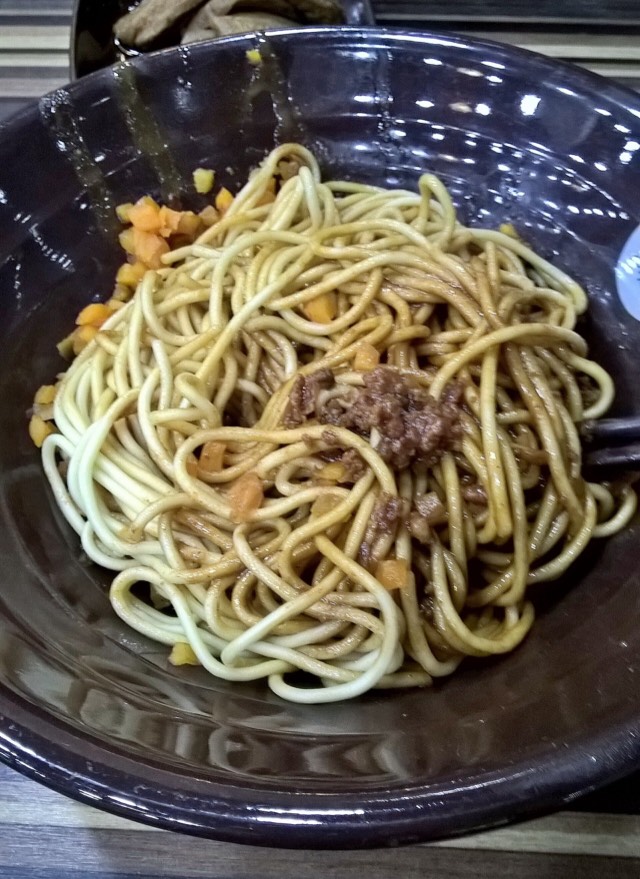
Photo: Nature42 · CC0 Hot dry noodles 热干面
The city's breakfast: springy noodles tossed with sesame paste, chilli oil and pickles, eaten on the go.
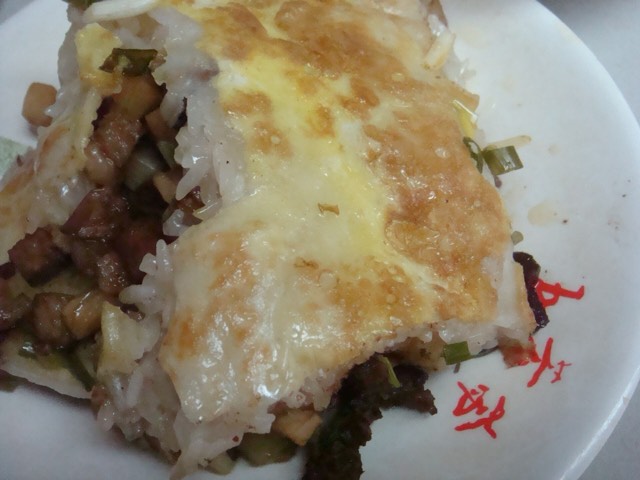
Photo: Philtse · Public domain Doupi 豆皮
A pan-fried layer of egg and bean-curd skin over sticky rice, pork and mushrooms, cut into squares.
Spicy duck neck 鸭脖
Duck necks braised in a numbing, spicy sauce, Wuhan's best-known snack to take home.
Sights
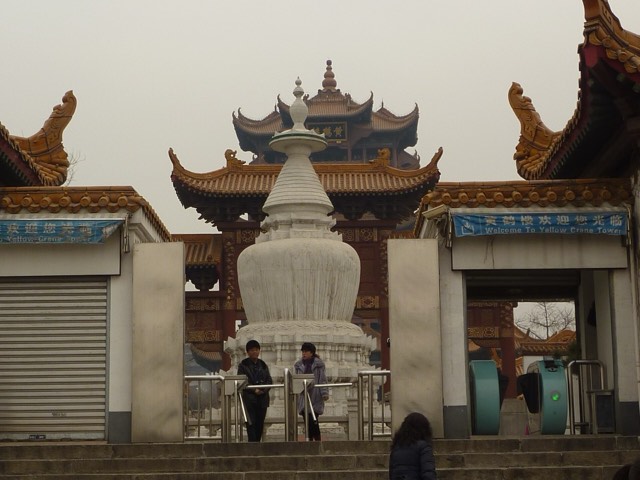
Photo: User:Vmenkov · CC BY-SA 3.0 Yellow Crane Tower 黄鹤楼
A rebuilt tower on Snake Hill, famous from Tang poetry, with views over the Yangtze.
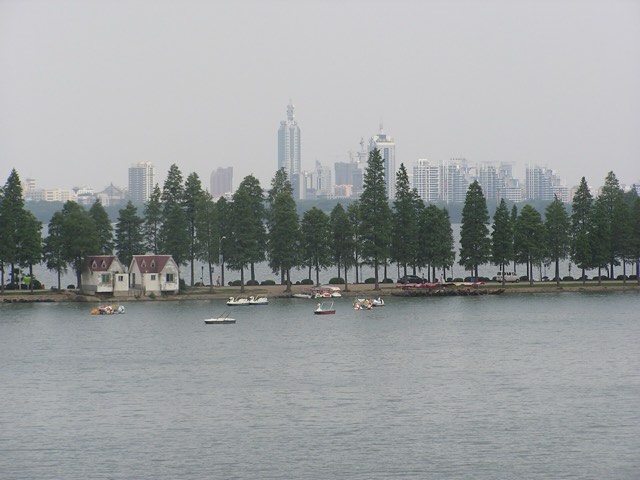
Photo: gugganij · CC BY-SA 3.0 East Lake 东湖
One of China's largest city lakes, with a long greenway for walking and cycling.
Hubu Alley 户部巷
A crowded snack street in Wuchang, best visited in the morning for 'guozao'.
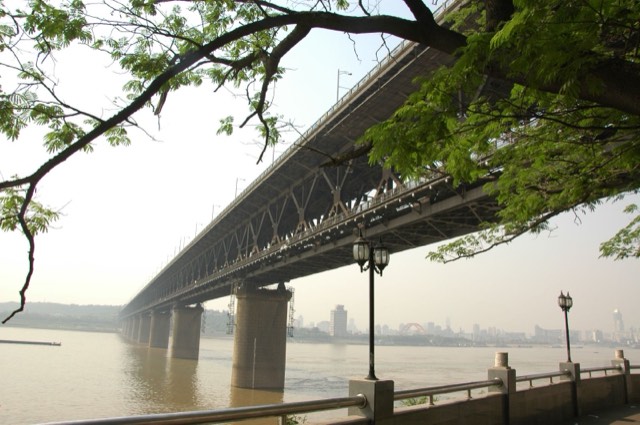
Photo: KongFu Wang from Beijing, China · CC BY-SA 2.0 Wuhan Yangtze River Bridge 武汉长江大桥
The first bridge across the Yangtze, opened in 1957, which you can walk across for river views.
Culture
Guozao breakfast culture 过早
Locals call breakfast 'guozao' and eat it out, so early-morning streets fill with noodle, doupi and dumpling stalls.
Cherry blossom season 樱花季
In March the cherry trees at Wuhan University and East Lake bloom and draw big crowds; campus visits then often need booking.